Explore hidden crypto community
External resource highlighted for Gambling Paradise readers.
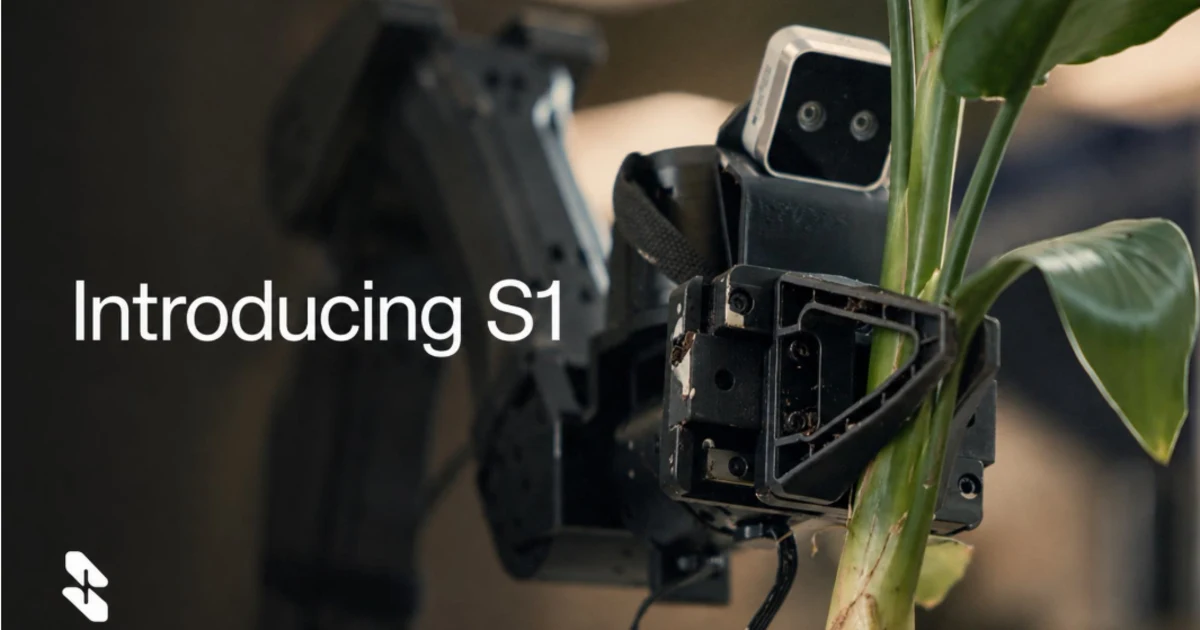
Skild AI announced on September 23, 2026 that its flagship S1 foundation model has mastered soccer through pure self-play, transferring the skill from NVIDIA’s Isaac Sim to a physical humanoid robot. The result proves that a strong base model can acquire ultra-dexterous, dynamic abilities without a single human demonstration, a claim backed by the company’s own demo video and the report on GamesBeat. This “Skild AI S1 robot soccer” milestone lands squarely in the crosshairs of crypto-backed betting platforms that crave high-variance, low-latency events.
Self-Play Beats Hand-Crafted Rewards
- No human data: S1 was given only one objective—score a goal.
- Iterative opponents: Each training cycle pitted the current policy against a recent version of itself, forcing continuous escalation.
- Emergent tactics: Within simulated months the robot progressed from wobbling on two legs to sophisticated moves like dribbling past defenders, shielding the ball and even tackling.
- Transfer success: After 140 simulated years, the policy was ported to a real-world S1 unit, which completed a full match without external guidance.
Takeaway: Self-play can replace labor-intensive reward engineering, a shift that could slash development costs for robot-centric gambling platforms that rely on autonomous agents.
Why Soccer Matters as a Testbed
- Physical-strategic blend: Soccer demands balance, locomotion, and real-time decision-making—exactly the mix needed to stress a physical AGI.
- Existing ecosystem: Robo-soccer cups exist, but performance lags human levels; S1’s breakthrough narrows that gap dramatically.
- Scalable template: Skild AI says the same self-play loop can be applied to construction, factory work or home assistance, meaning the soccer demo is a proof-of-concept for broader automation.
Takeaway: Operators eyeing robot-based esports betting now have a concrete sport where AI can quickly reach parity with human skill, opening a new revenue stream.
Market Ripple Effects for Crypto-Backed Betting
- New wagering assets: Autonomous robot leagues could be tokenized, allowing bettors to stake crypto on match outcomes, similar to current e-sports betting markets.
- Liquidity concerns: Early-stage robot competitions will have thin order books; price impact could be severe, especially if a single S1 unit dominates a league.
- Regulatory gray zone: Existing gambling frameworks focus on human participants. The rise of AI-only contests may force regulators to draft rules around algorithmic fairness and anti-manipulation safeguards.
Takeaway: Crypto operators must build robust oracle solutions and risk models now, before robot leagues become mainstream.
Operational Risks and Red-Team Checks
- Simulation-to-real gap: While S1 transferred successfully, subtle physics mismatches can cause unexpected failures in live matches, potentially invalidating bets.
- Self-play bias: Training against copies of itself may converge on strategies that exploit simulation loopholes, creating “unfair” play that human viewers can’t detect.
- Security surface: An autonomous robot betting platform becomes a high-value target for hacking; compromising the policy could tilt outcomes and trigger massive payouts.
Takeaway: Operators should enforce multi-layer verification—hardware checks, independent simulation audits, and real-time monitoring—to mitigate systemic risk.
What to Watch Next
- Scale-up experiments: Skild AI promises larger-team self-play, aiming for collaborative manipulation and city-scale navigation. Success could spawn whole new categories of AI-driven contests.
- Industry response: Gaming and betting firms are already scouting the technology; watch for partnership announcements or pilot leagues in the next quarter.
- Regulatory signals: The UK Gambling Commission and US state gaming boards have begun reviewing AI-only competition frameworks. Any guidance will set the compliance baseline for crypto-betting platforms.
Takeaway: The next 12 months will define whether robot soccer becomes a niche novelty or a cornerstone of AI-powered gambling ecosystems.
Skild AI’s S1 robot demonstrates that physical self-play can push robots beyond human limits, turning a playground sport into a potential high-stakes betting arena. For crypto-focused gambling operators, the signal is clear: adapt now or risk being left on the sidelines when autonomous robot leagues take the field. For further reading on simulation-to-real transfer, see NVIDIA’s overview of Isaac Sim at NVIDIA Isaac Sim. Internal reference: see our analysis of AI-driven betting risk on the GamesBeat technology hub.
Related coverage
- Xbox Announces Second Wave of Layoffs and Studio Consolidation
- Rayman Legends Retold Snowdrop engine: Ubisoft’s Platformer Upgrade Risks and Rewards
- PUBLSH Launches with Disco Elysium-Inspired Title Pera Coda