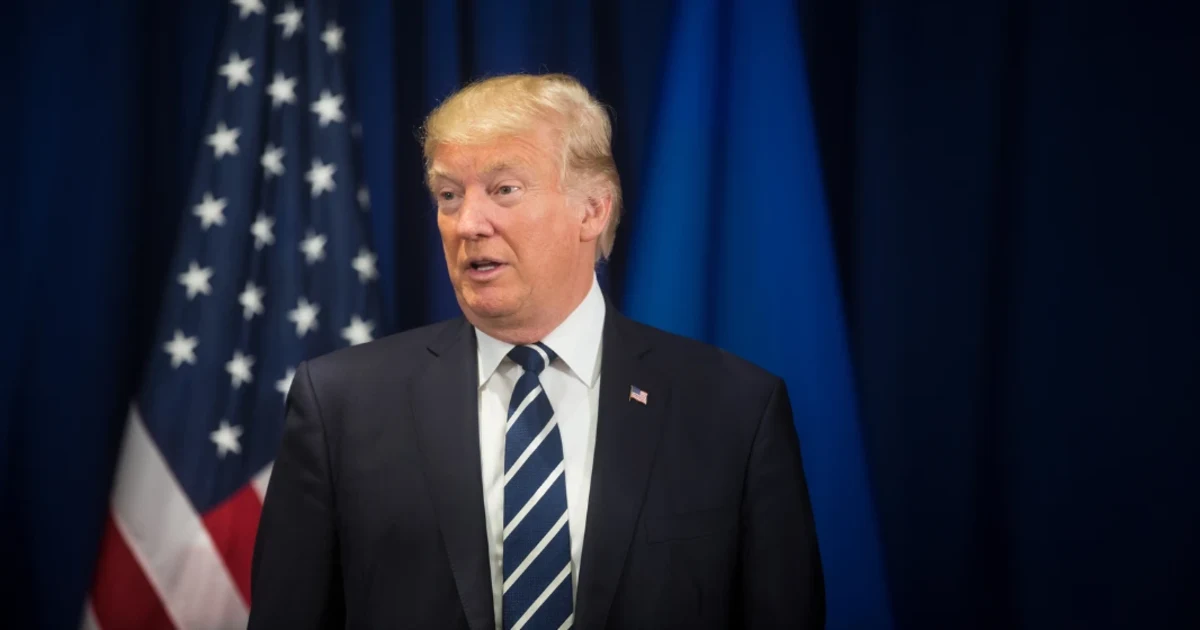
UAE stake in Trump crypto bank reshapes the crypto-bank landscape
The most recent verified fact is that Sheikh Tahnoon bin Zayed al Nahyan, the UAE’s national security adviser, now holds a 49% passive stake in World Liberty Trust Company (WLTC), the chartered national trust bank that will service Trump-linked crypto projects such as the USD1 stablecoin. The stake was acquired through StringZ Holding RSC for roughly $500 million, with $263 million reportedly routed to entities controlled by the Trump family, according to a Wall Street Journal report cited by the source URL.
Regulatory context: reputational risk removed
On August 27, the OCC and FDIC issued a joint final rule redefining “unsafe or unsound practice” for U.S. banks. The new definition drops “reputational risk” as a supervisory trigger, focusing solely on material harm to a bank’s financial condition. The rule takes effect 60 days after publication, meaning WLTC will be evaluated under a narrower lens that may overlook political or image-based concerns.
Why the passive commitment matters
When the OCC conditionally approved WLTC’s charter, it required three shareholders—including StringZ—to sign “passivity commitment” documents. These limit the investors to a hands-off role, ostensibly to keep congressional scrutiny at bay. The commitments reduce direct governance influence but do not eliminate capital-driven incentives that could shape product pricing, liquidity provision, or risk appetite.
USD1 stablecoin: from $128 M to $4.2 B
World Liberty Financial (WLF) leverages WLTC to bring custody of USD1’s fiat reserves in-house, cutting fees paid to third-party custodian BitGo. The stablecoin’s market cap exploded from roughly $128 million in early 2025 to nearly $4.2 billion after a $2 billion investment by the UAE-run MGX fund, which deliberately used USD1 rather than cash. The token now ranks fifth among dollar-backed stablecoins, with about 90 % of supply residing on Binance’s BNB Smart Chain. Binance claims no preferential treatment for USD1, yet the partnership underscores how sovereign capital can amplify a token’s market position.
Kraken-Hyperliquid US futures play
Kraken is negotiating a U.S. perpetual futures partnership with Hyperliquid, a fast-growing derivatives platform. If the deal closes, Kraken will gain access to Hyperliquid’s order-book depth, potentially offering iGaming operators and retail traders a new venue for leveraged crypto exposure. The partnership also introduces counterparty risk: Hyperliquid’s U.S. regulatory status remains in flux, and any future enforcement action could cascade to Kraken’s user base, especially those betting on high-volatility futures.
Operational risks for iGaming stakeholders
- Liquidity concentration – With 90 % of USD1 on Binance, any disruption to Binance’s network or regulatory clampdown could freeze a large slice of stablecoin liquidity that iGaming platforms rely on for deposits and payouts.
- Governance opacity – Passive ownership does not guarantee transparency. iGaming operators that integrate USD1 must monitor WLTC’s shareholder disclosures, as hidden political influence could trigger sudden policy shifts.
- Regulatory arbitrage – The OCC/FDIC rule change may embolden other crypto-bank applicants to seek similar passive-ownership structures, creating a patchwork of institutions that evade reputational scrutiny while still posing systemic risk.
- Derivative exposure – Kraken’s prospective futures offering could attract aggressive betting on crypto price swings. Without robust margin controls, a market shock could generate cascading defaults across gambling platforms that extend credit to traders.
Market signals and what to watch next
- FinCEN beneficial-ownership rollback – The agency’s decision to permanently revoke BOI reporting removes a key transparency tool. Watch for congressional pushback that could reinstate reporting or impose new AML obligations.
- OCC enforcement trends – Although reputational risk is stripped from the “unsafe practice” definition, the OCC may still leverage other supervisory tools (capital adequacy, stress testing) to police politically linked banks. Future OCC statements will hint at how aggressively they intend to police WLTC.
- Stablecoin reserve audits – Independent verification of USD1’s fiat backing will become a litmus test for credibility. iGaming firms should demand third-party attestations before accepting USD1 for high-value wagers.
- Kraken-Hyperliquid contract details – The exact terms of the futures partnership—margin requirements, settlement mechanisms, and insurance funds—will dictate exposure levels for gambling operators that offer crypto-futures betting.
- DeFi ecosystem health – Monitoring total value locked across DeFi protocols can surface liquidity squeezes before they hit gambling platforms. The DeFi TVL dashboard provides a real-time view of ecosystem health.
Strategic recommendations for gambling operators
- Diversify stablecoin holdings – Relying heavily on USD1 is a concentration risk. Maintain a basket that includes USDC, USDT, and a regulated fiat gateway.
- Implement real-time ownership monitoring – Use blockchain analytics and corporate registries to track changes in WLTC’s shareholder composition. Sudden shifts could signal upcoming regulatory scrutiny.
- Stress-test futures exposure – Model worst-case price moves on Kraken-offered contracts and set hard limits on user leverage. Consider requiring collateral in a non-crypto asset for large positions.
- Leverage DeFi TVL data – Monitoring total value locked across DeFi protocols can surface liquidity squeezes before they hit gambling platforms. The DeFi TVL dashboard provides a real-time view of ecosystem health.
Bottom line
The convergence of a sovereign-backed passive stake in a Trump-affiliated crypto bank, a regulatory rule that downplays reputational concerns, and a looming Kraken-Hyperliquid futures launch creates a perfect storm for iGaming risk managers. While the capital infusion may boost USD1’s market cap and liquidity, the opaque ownership structure and weakened oversight mechanisms elevate the probability of sudden policy reversals, liquidity freezes, or enforcement actions that could cripple gambling operators’ cash flows. Vigilant monitoring, diversification, and robust risk controls are no longer optional—they are essential for survival in this increasingly politicized crypto-banking arena.